ROSENCRANTS AND GUILDENSTERN ARE DEAD
Rosencrantz
Rosencrantz seems to accept things without question, this is somewhat foreshadowed in the first scene when he wins a coin flip toss 92 times, he accepts that Hamlet has out witted them when Hamlet runs off to go confront Claudius, and he's willing to accompany his friend to england. Despite his more laid back attitude towards his fate he stil seems genueinly concerned with Guildensten's feelings as he will attempt to find ways to cheer his friend up such as making easy bets for his friend to win.


My Hamlet designs all involve flowers in some way, with Rosencrantz being represented by a burgundy rose, often associated with captivating beauty that the recipient may be unaware of. Maybe its because of how I draw him but I've always thought of Rosencrantz as being much more feminine, if not trans-feminine outright? But idk if I'd go that far (Hamlet is DEFINITELY trans tho but I wount get into it here.) So I thought this flower fit. Also the whole "these two are REALLY GOOD FRIENDS wink face" vibe I get from them.
In Hamlet
 Rosencrantz and Guildenstern in Hamlet are mostly religated to the sidelines. All we know is that they're his childhood best friends, and that's mostly it. This is pretty unsurprising as they serve as another vehicle for the play's primary theme of inaction vs. action. Hamlet calls them out for being pawns for the king to spy on him, and when Claudius asks for them to go escort Hamlet to England for his execution, Hamlet forges a letter from the king to instead, execute Rosencrantz and Guildenstern and giving him a perfect opportunity to sneak back to Denmark.
Once the deed is done, he tells horatio about the whole thing, which is how we the audience learn of the circumstances of their deaths, with their final mention being through an english courtier proclaiming "Rosencrantz and Guildenstern are dead."
In Rosencrantz and Guildenstern are Dead
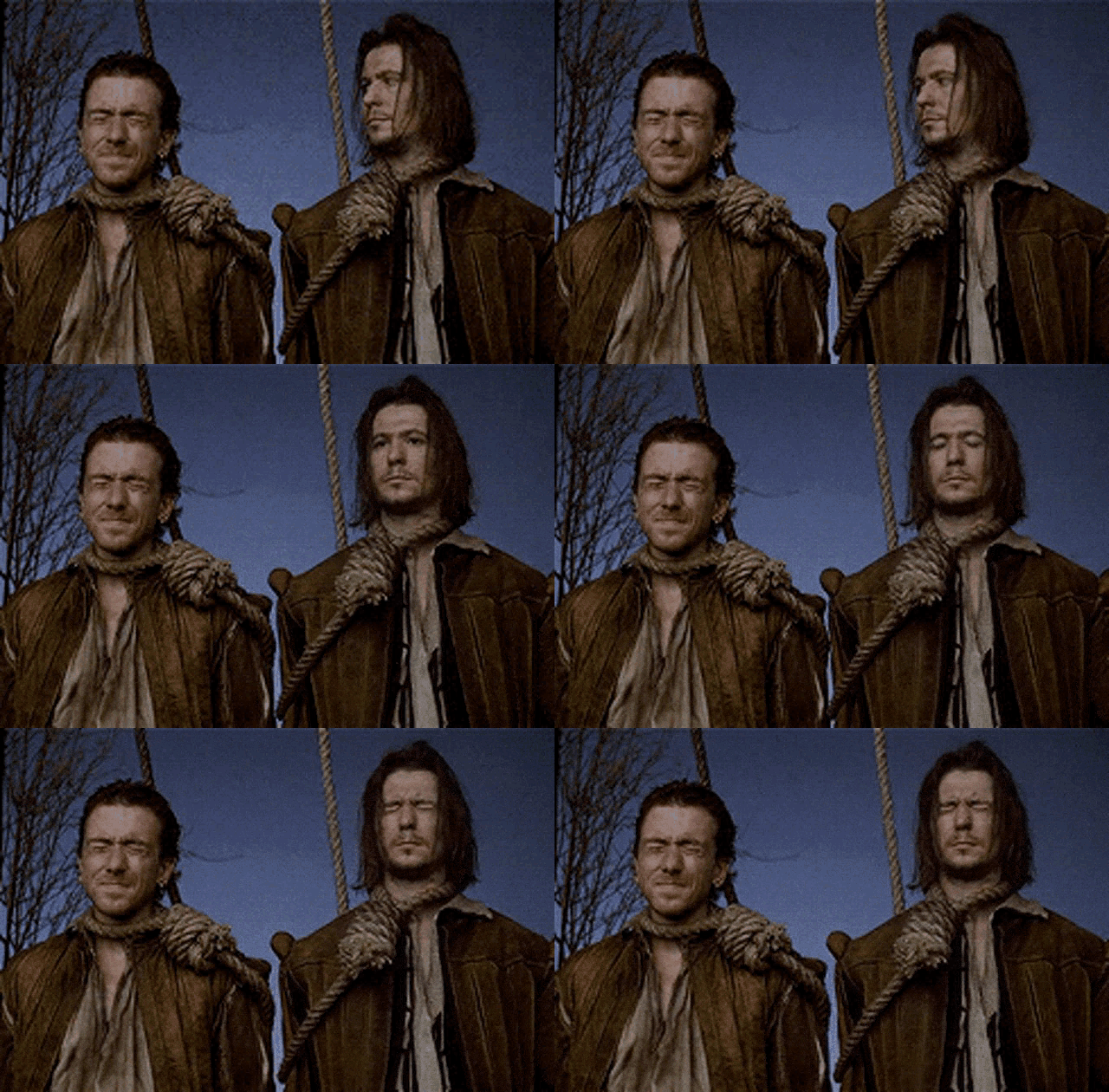 In Tom Stoppard's reimagining, we experince the events of the play through Ros and Guil's eyes, in some of the scenes, quite litterally as the actors who originally played "The Murder of Gonzago" in Hamlet also act out a few scenes from the original tradgedy. Throught the play the actors constantly foreshadow Ros and Guil's fates by playing out and even dressing like them at some points, leaving Ros and Guil to only speculate about the nature of their deaths.
This specific version of the characters (Which is what ill be summurizing in their charcter bios) are deffinetly more "comic relief characters being put through the horrors." which is just a *mwah* trope. Throughout the story, there's also the underlying theme of free will vs. destiny and all that, obviously through the lense of two characters who know they're about to die at the end of their journey. However, unlike most character in that situation where they might try to test fate but ultimatly meet it on the path to avoiding it (like a certain scottish king I know), the play mainly focuses on the destiny portion of that argument, with the characters not doing much to avoid their fates except maybe questioning why it is they're staying and playing along.
Why do I like these goobers?
I don't, I hate them so much I'm glad they're dead. No but actually, I'm just such a big fan of comic relief characters suddenly getting the most heartwrenching backstory of all time. Plus that paired with the concept of them being trapped in a time loop BECAUSE HAMLET HAS BEEN PERFORMED SO MUCH???? ughghh oh my gooooddddddddd guys guys sgus. I also just personally enjoy them as characters, they're honestly wasted in the original like they shoulda made more gay jokes at Hamlet's expense like yes the call is coming from inside the house but like idk man.
Guildenstern
Guildenstern on the other hand is the more combattive of the two. He points out the absurdity of losing a coin toss 92 times and he often fights with the players about how they portray the character's they're acting. However, at the end when they're inevitably sent to death, Guildenstern says the iconic "we'll know better next time" speech, kind of implying he's also willing to religate his fate to an unknown force despite his constant push back against the idea of his fate already having been decided.


Again, with my Hamlet designs I assign flowers to them and I know four leaf clovers aren't technically flowers but whatever screw you I like it (jk, I love you if you're reading this). Clovers are commonly associated with luck via St. Patrick's day, but they can also act as a symbol of trust. I think it'd be a cool concept if throughout the play the clover started slowly losing leaves until he simply had nothing but a wilted plant in his pocket once they get executed, somewhat representing whatever "luck" he had in the first place had run out.